
Rockfall Risk
Falling and rolling rock is one of New Zealand's most common geohazards — threatening state highways, rail corridors, and infrastructure in steep and mountainous terrain.
Rockfall Hazards
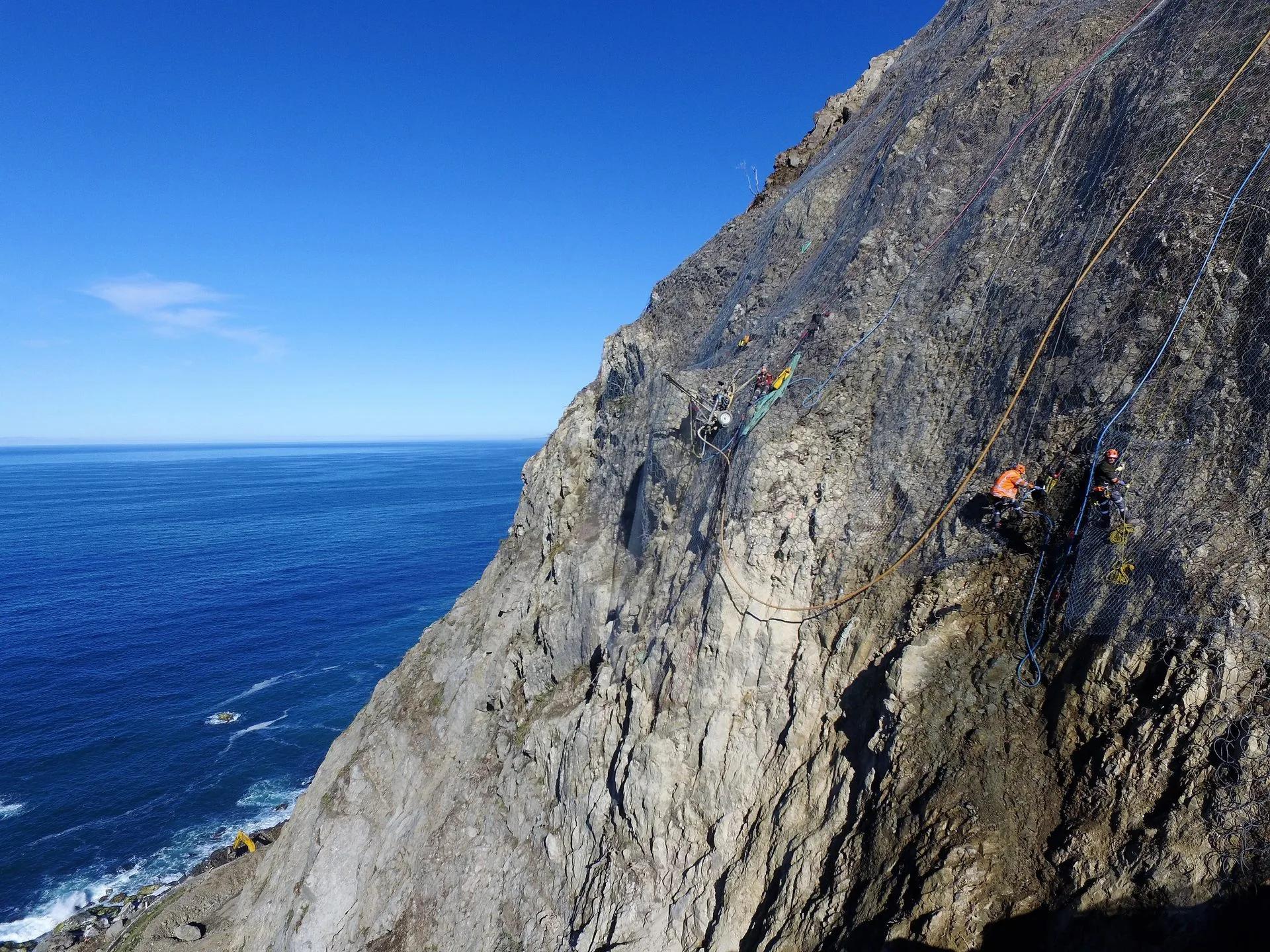
Unstable rock above roads, tracks, or structures with potential to fall without warning. New Zealand's steep alpine and coastal terrain means many transport and infrastructure corridors sit directly beneath unstable rock faces — particularly on the West Coast, Canterbury foothills, and Hawke's Bay ranges. Even moderate-sized rockfall events can close critical corridors for days or weeks.
Engineering assessment is the first step — characterising the rock mass, identifying failure modes, and modelling probable trajectories and energies to determine what combination of active and passive mitigation is appropriate. GSI NZ installs rockfall barriers rated to 8,000 kJ and above — the highest energy capacity available in New Zealand — and our IRATA rope access crews can begin stabilisation work on vertical faces with no road or platform access.
Warning signs to watch for
- —Fresh rock debris or scree accumulating on roads, tracks, or at the base of slopes
- —Visible overhangs, undermined rock faces, or toppling blocks
- —Cracking or detachment lines visible in the rock face
- —Evidence of previous rockfall events — impact marks on road surfaces, damaged guardrail, or crushed vegetation
Loose Rock on Slopes
Weathered or fractured rock faces that shed material progressively — often triggered by rainfall, frost, or seismic activity. Unlike single rockfall events, these slopes produce a continuous stream of smaller material that accumulates in ditches, on roads, or against infrastructure. Without active management, shedding rates typically increase over time as weathering progresses.
Warning Signs to Watch For
Progressive scattering of rock fragments on roads or at the slope base after rain or cold weather
Visibly weathered, fractured, or discoloured rock faces with loose surface material
Small rockfalls occurring repeatedly after rainfall or freeze-thaw cycles
Vegetation growing in rock joints — roots can accelerate weathering and fracturing over time
ROCK SLOPE STABILITY
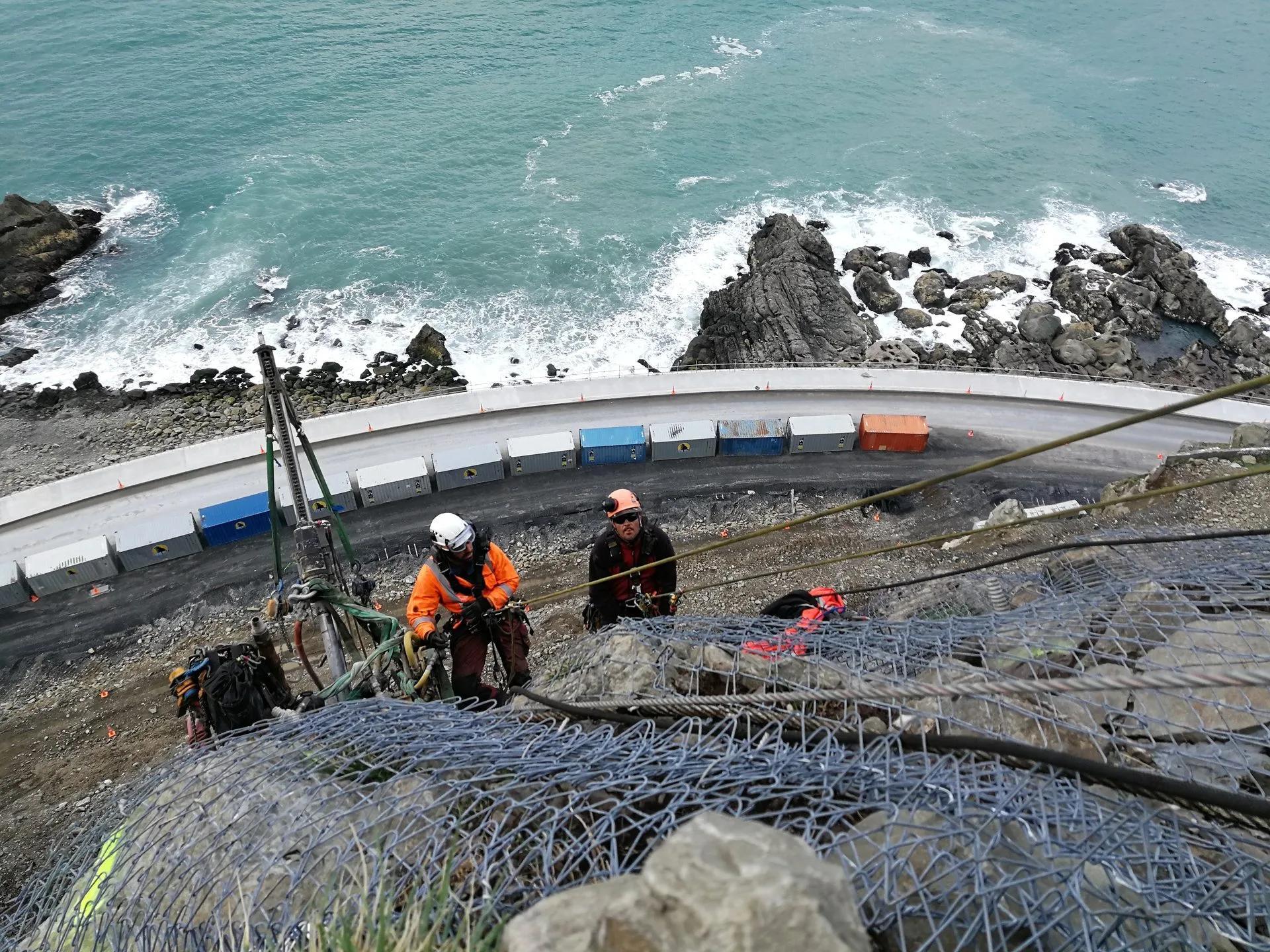
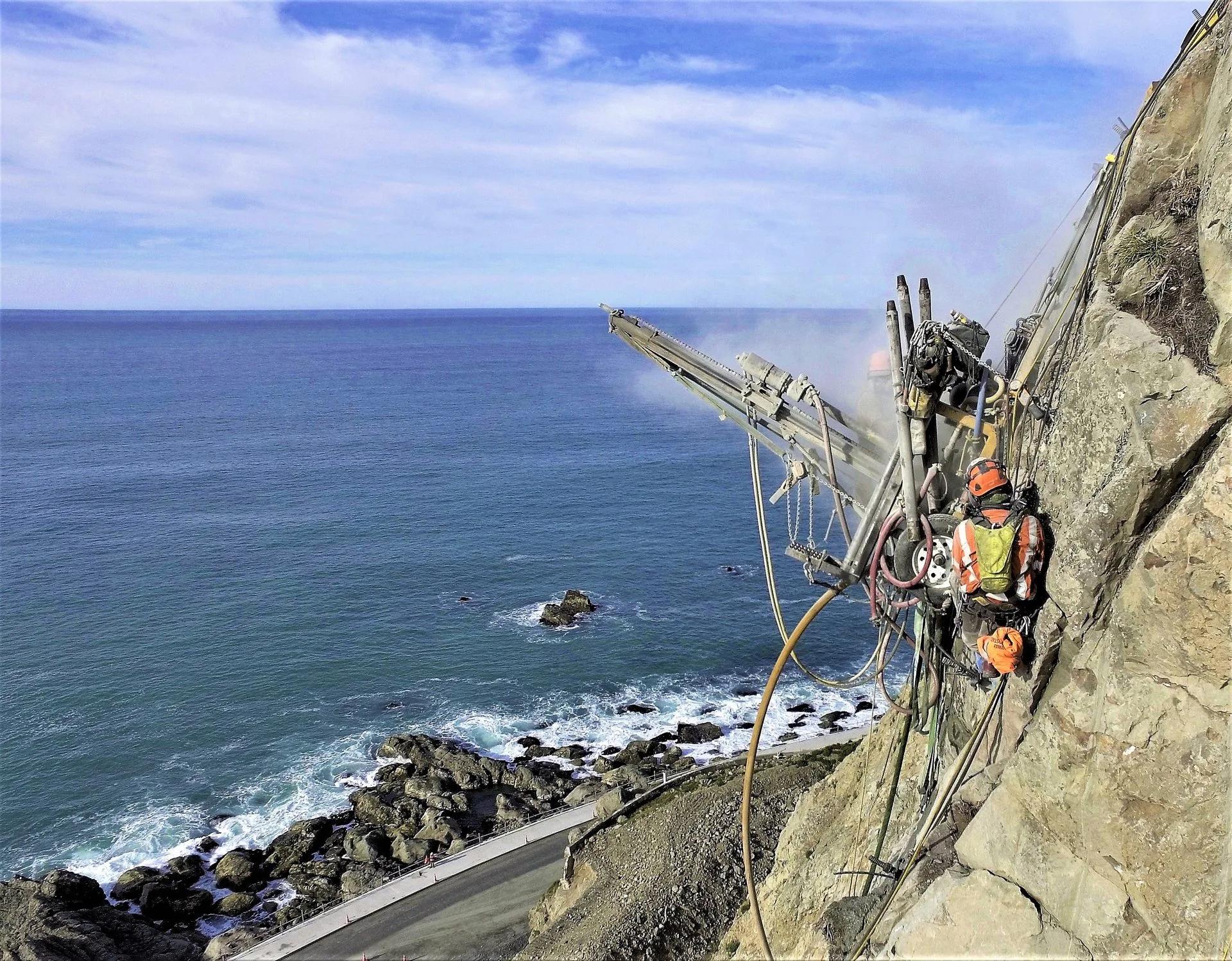
Slopes where the overall rock mass — not just loose surface fragments — is at risk of larger-scale failure. These failures can involve significant volumes of rock and pose extreme risk to infrastructure, transport corridors, and communities below. Engineering assessment is essential to understand the failure mechanism and select appropriate stabilisation.
Rock slope instability in New Zealand is most commonly driven by geological structure — joint sets, faults, or bedding planes that dip adversely toward the slope face. GSI NZ carries out detailed structural assessments to identify dominant failure modes, model probable failure volumes and trajectories, and determine the most effective combination of active stabilisation and passive protection measures.
WARNING SIGNS TO WATCH FOR
- —Large-scale cracking or tension cracks near the crest of a slope
- —Blocks or sections visibly moving, tilting, or rotating away from the rock face
- —Seepage or water emerging from joints or the base of a rock slope
- —Unusual sounds — cracking or grinding — from within the slope
Insufficient Rockfall Catchment
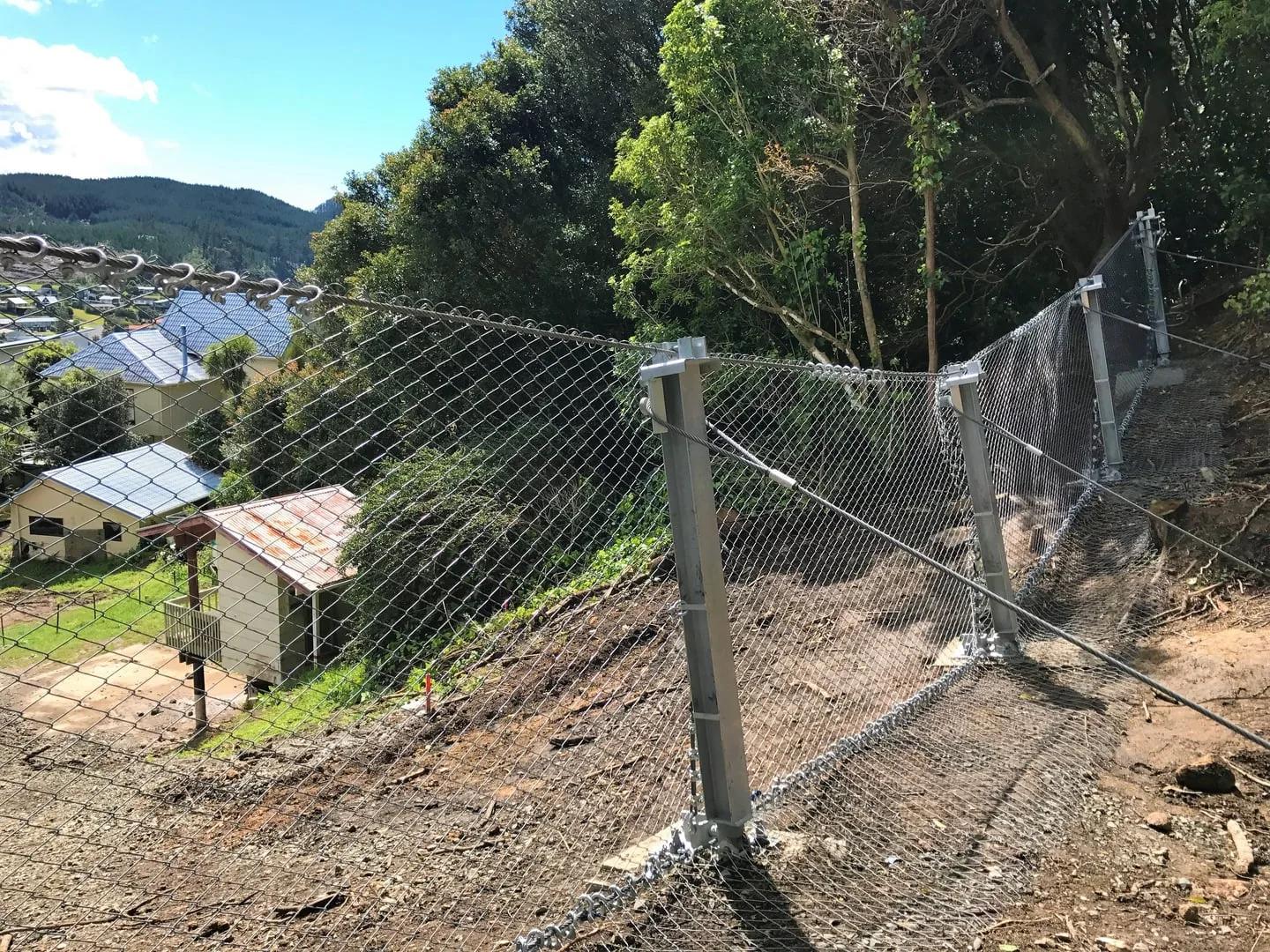
Existing barriers, nets, ditches, or catch walls that no longer provide adequate protection — either because rockfall activity has increased, barriers have been damaged by previous events, or original design capacity has been exceeded. Relying on under-capacity protection creates serious liability and safety risk.
GSI NZ carries out engineering assessment of existing protection systems to determine whether they remain fit for purpose, and designs upgrades or replacements where current capacity is insufficient. Our fleet of rockfall barriers spans the full range of energy ratings — from attenuators for lower-energy events to high-capacity barriers rated to 8,000 kJ and above. All barrier systems are installed by our own crews, with no reliance on subcontractors for fabrication or installation.
Warning signs to watch for
- —Rock debris accumulated at or beyond the edge of existing ditches or barriers
- —Visible impact damage to barrier nets, attenuators, or catch walls
- —Barriers visibly deformed, displaced, or loaded beyond design capacity
- —New rockfall activity not captured by existing protection systems
Related projects: Epitaph Haast — State Highway 6, Lone Kauri & Karekare Roads
Our Approach
HOW WE SOLVE IT
GSI NZ engineers design and build the right solution for each site — from assessment through to installation.
Don't Wait
Why Rockfall Risk Escalates Over Time
01
Progressive Weathering
Joint opening and material degradation increase instability with every rainfall and freeze-thaw cycle. Small events become bigger ones.
02
Catchment Saturation
Existing ditches and barriers fill beyond capacity, leaving corridors exposed and unprotected with every subsequent event.
03
Compounding Cost
Repeated clean-up without mitigation is expensive and leaves the hazard unchanged. Proactive intervention almost always costs less in the long run.
FREQUENTLY ASKED QUESTIONS
Get in Touch
Rockfall Risk?
Get It Assessed.
Rockfall is one of New Zealand's most unpredictable geohazards. Our engineers will assess the hazard level and recommend the right mitigation approach for your site.
Request an Assessment