STEP 1
GET IN TOUCH
Tell us what you're seeing at your property. We'll talk it through to understand the problem and whether a site assessment is the right next step.
Engineering-led foundation repair for New Zealand homeowners. We start by working out what the ground and the building are actually doing, then build the fix around that diagnosis — the method is a conclusion, never a starting point.
Noticed your home moving? Get a free engineering assessment.
This is for owner-occupiers noticing ongoing or worsening signs of ground or foundation movement. Not every symptom needs engineered intervention — some are purely cosmetic. A Chartered Engineer will tell you which is which.
A floor that visibly slopes or just feels different underfoot than it used to. Often noticed first when furniture won't sit flush, or a dropped object rolls off on its own.
Cracking around windows, door frames, or internal walls that keeps coming back after being patched. A crack that returns points to movement that's still happening, not a one-off settling event that's finished.
Door and window frames shifting out of true, so they stop opening, closing, or latching properly. It's a sign the structure is distorting as the ground beneath the home moves.
One corner of the house — or a section of floor — visibly dropping, usually after prolonged wet weather has softened the ground beneath it.
A gap opening up where a wall meets the ceiling, floor, or another wall. It tends to appear gradually and keep widening if whatever's causing the movement isn't addressed.
A section of flooring that's gone soft or springy underfoot, having lost the firm support it once had — usually a sign the ground or substrate below has shifted or broken down.
Every crack and gap shown here was measured and numbered before any work began, then monitored again afterwards to confirm the movement had actually stopped — not just covered over.
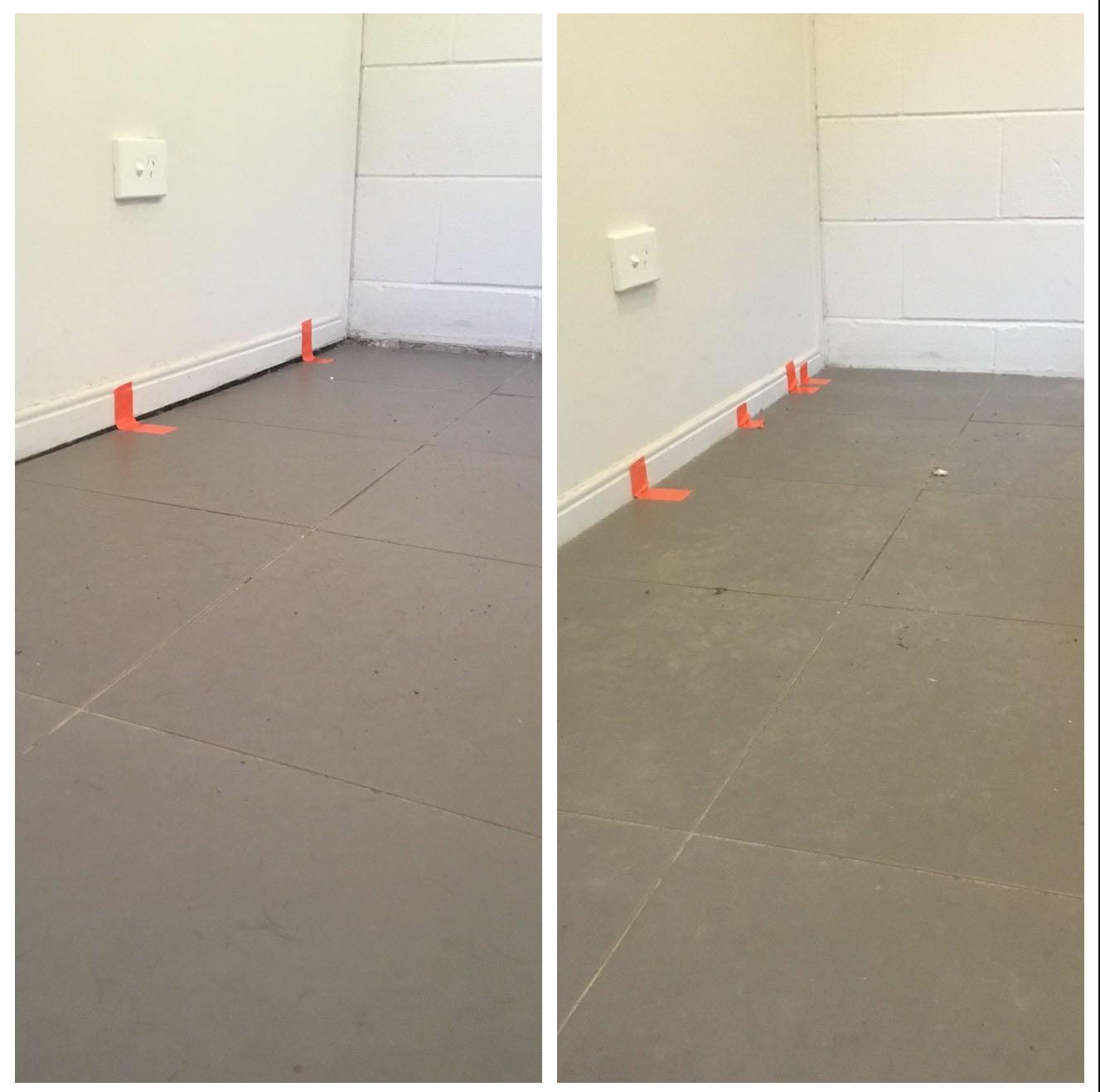
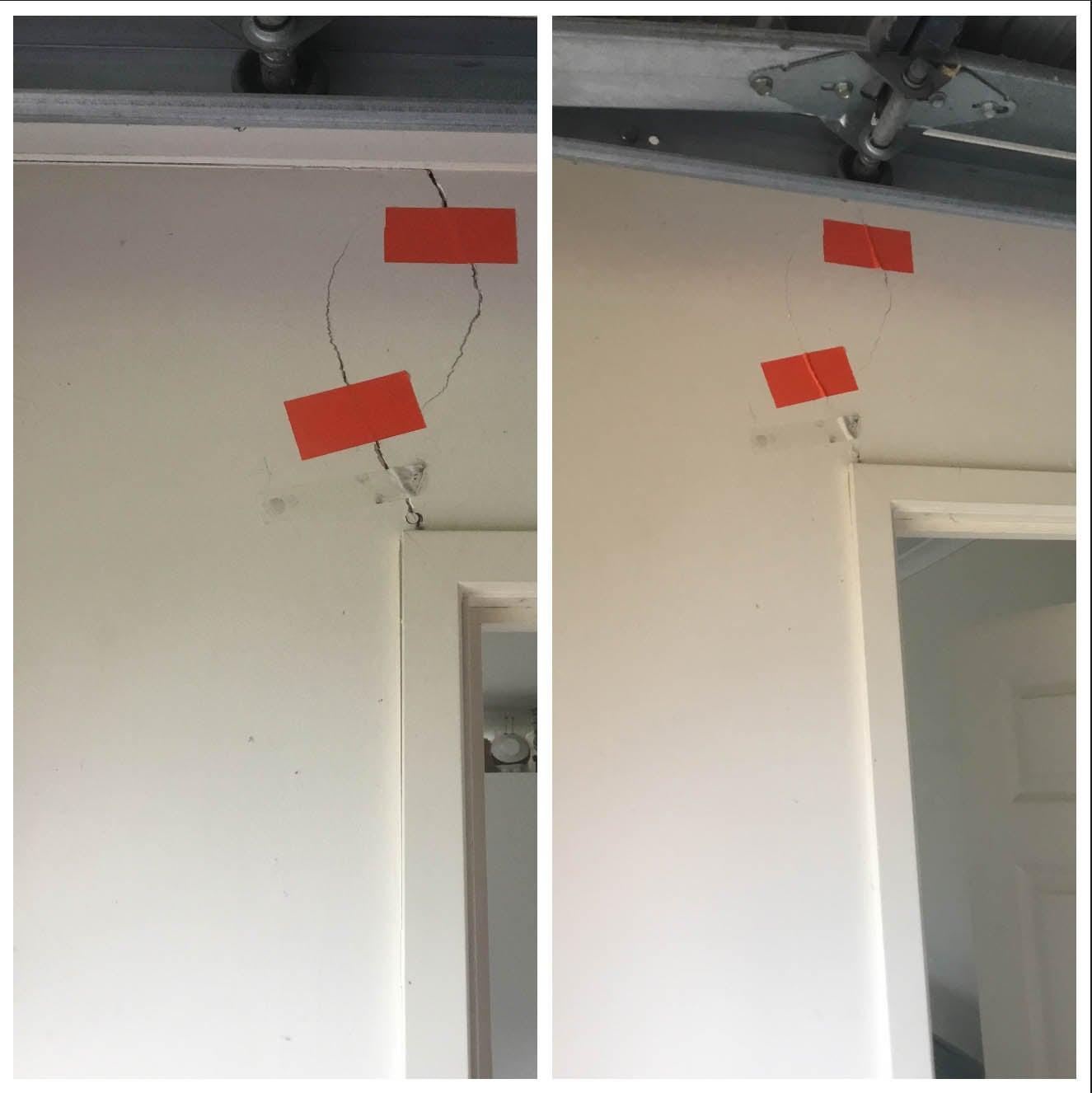
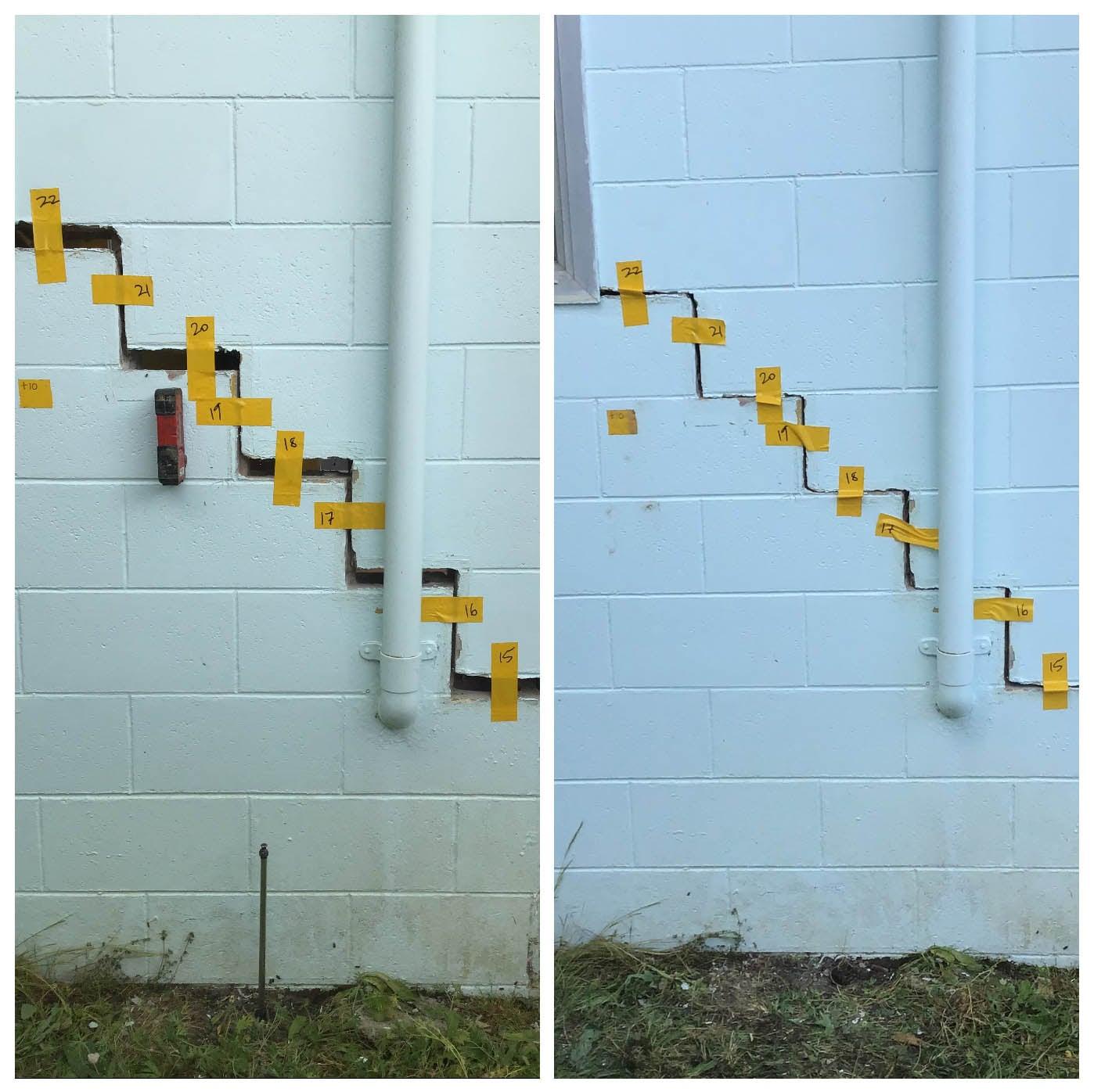
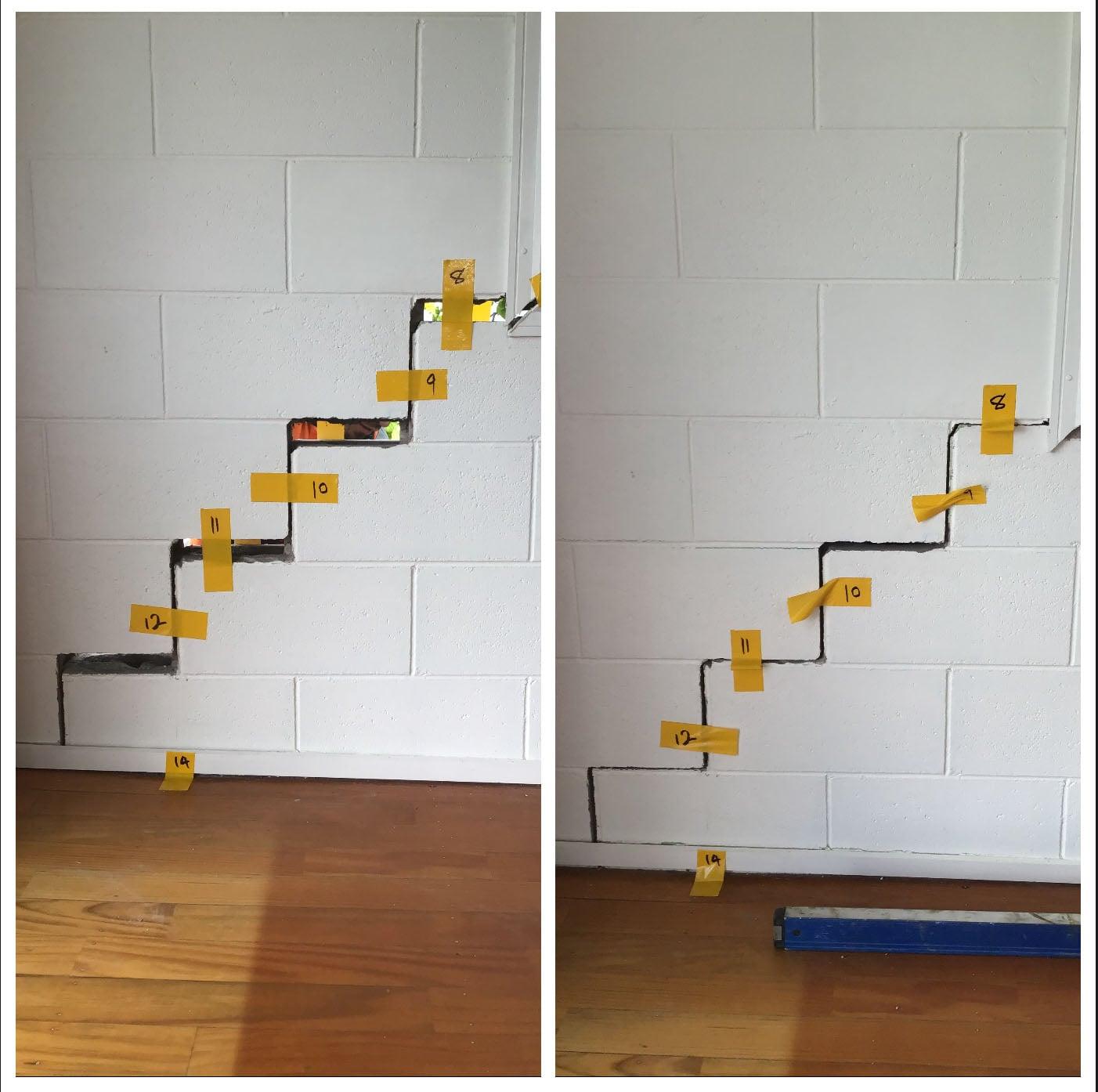
Residential foundation repair means investigating and addressing ground movement or foundation instability beneath a home. Ground behaviour changes with soil type, moisture, drainage, loading, and site conditions — which is exactly why assessment always comes before any recommendation. Re-levelling without an assessment first is guesswork; an engineering assessment tells you why the symptoms are actually happening.
GSI Residential runs on the same engineering backbone as GeoStabilization New Zealand Ltd's infrastructure work — over two decades of it. Rather than treating a home differently to a bridge or a slope, we hold it to the same standard: investigate first, design second, and only then pick a method — or blend of methods — that actually addresses why the ground moved, not just where it cracked. Every job finishes with a design and build warranty on the workmanship itself, not just the materials used.
THE GSI DIFFERENCE
Most residential ground repair companies lead with a product. GSI Residential leads with engineering. Before any work is recommended, a Chartered Engineer visits your property — at no charge — to assess the ground conditions and how the building has been moving. Ground behaviour is complex and site-specific: soil type, moisture, drainage, loading, and foundation conditions all shape what the right solution looks like. That's what sets GSI Residential apart from other residential foundation repair services in New Zealand — we work out what's happening beneath your home before we decide how to fix it.
OUR PROCESS
STEP 1
Tell us what you're seeing at your property. We'll talk it through to understand the problem and whether a site assessment is the right next step.
STEP 2
A Chartered Engineer comes to your property at no charge, assesses the ground conditions, reviews how the building has been moving, and gets to the underlying cause — not just what's visible on the surface.
STEP 3
You get our findings, the proposed engineered solution, and a clear breakdown of scope and cost. Nothing is assumed going in — every recommendation has to earn its place on engineering grounds.
STEP 4
Our own crews carry out the work under engineering supervision, using the methods chosen for your specific site conditions. Every installation is measured, monitored, and verified once complete.
STEP 5
We follow up after the work is done to confirm the outcome and answer any questions that come up. The warranty means it's still our problem if something resurfaces later, not yours.
Final outcomes, scope, and expectations are only set after engineering assessment and design — never before. Where re-levelling is the appropriate response, it may help achieve:
Correcting floor slope or unevenness caused by ground movement, wherever re-levelling is the technically appropriate response for the site.
Shifting structural load onto ground that can actually support it, so the foundation is less likely to settle unevenly again down the track.
Treating the ground conditions behind the movement itself, rather than the crack or gap it left behind — so the underlying problem doesn't just keep progressing.
An engineered fix backed by a performance warranty, with a clear record of what condition the foundation was in and exactly what was done to address it.
We don't turn up with a preferred fix in mind. What gets used is whatever the investigation and the engineering actually point to, decided fresh on every site.
Once assessment is complete, re-levelling may draw on one or more of the following engineered techniques. Which one gets used comes down entirely to site conditions, soil behaviour, depth of movement, and structural requirements — and in plenty of cases, the assessment confirms no intervention is needed at all.
Resin injected beneath the slab or foundation to improve the ground and re-level shallow settlement. Lifts and stabilises with minimal disruption to the household.
Piling or deep support systems for foundations that need extra load transferred down to competent ground. Used when site conditions call for more than a surface-level fix.
Computer-controlled installation that carries structural load through weak or unstable soils down to competent bearing ground. Performance is verified as each pile goes in.
Where a site calls for more than one approach, underpinning, re-levelling, and ground improvement are brought together into a single, coordinated engineered response.
Get in Touch
Start with a free residential site assessment. Our engineers will look at your situation and walk you through your options clearly — no obligation, no jargon.
Book an Assessment