
Slope Instability
Slope instability is a leading cause of infrastructure damage across New Zealand — from Cyclone Gabrielle highway closures to hillside residential failures.
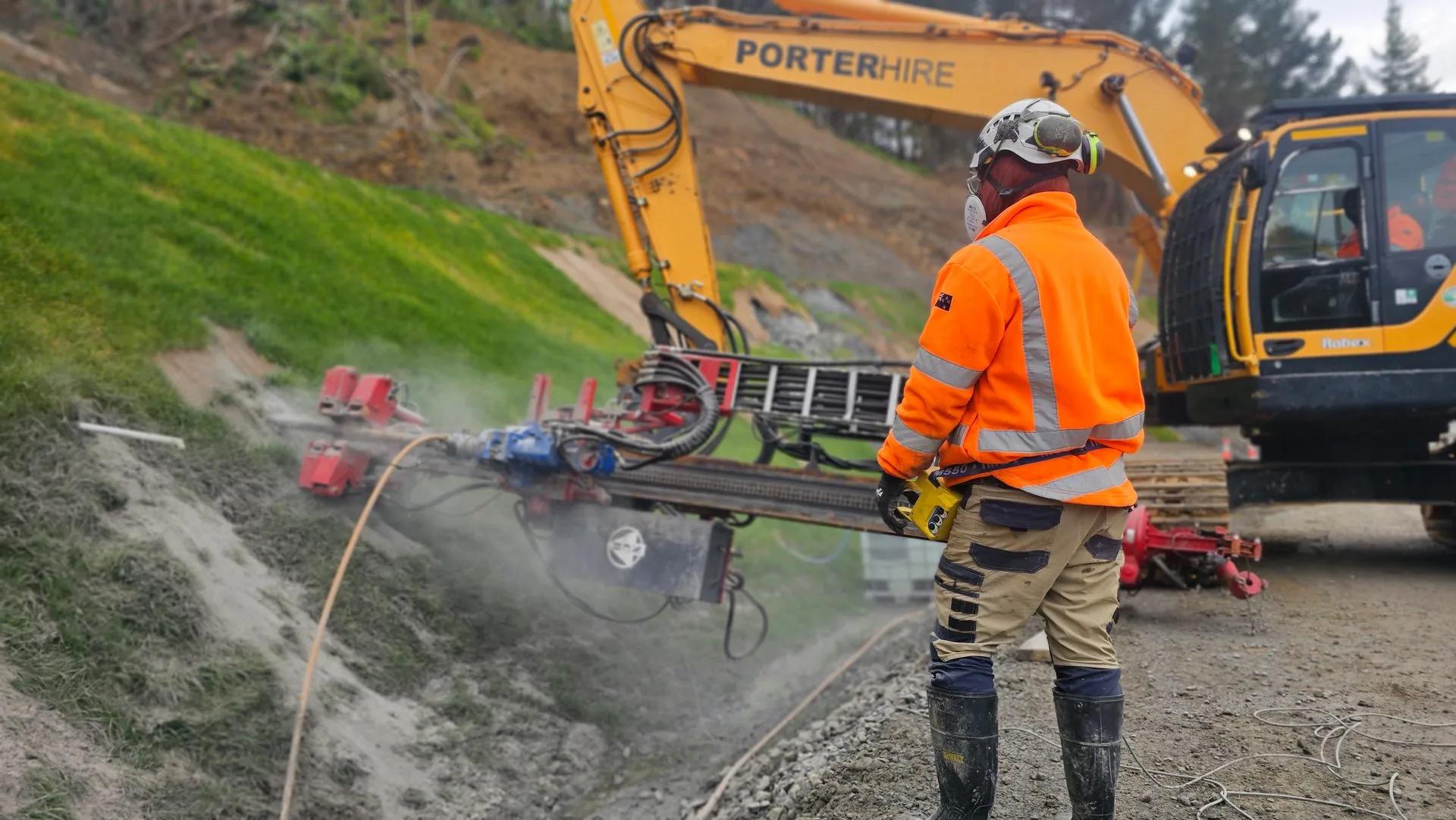
Steep Slope Stability Issues
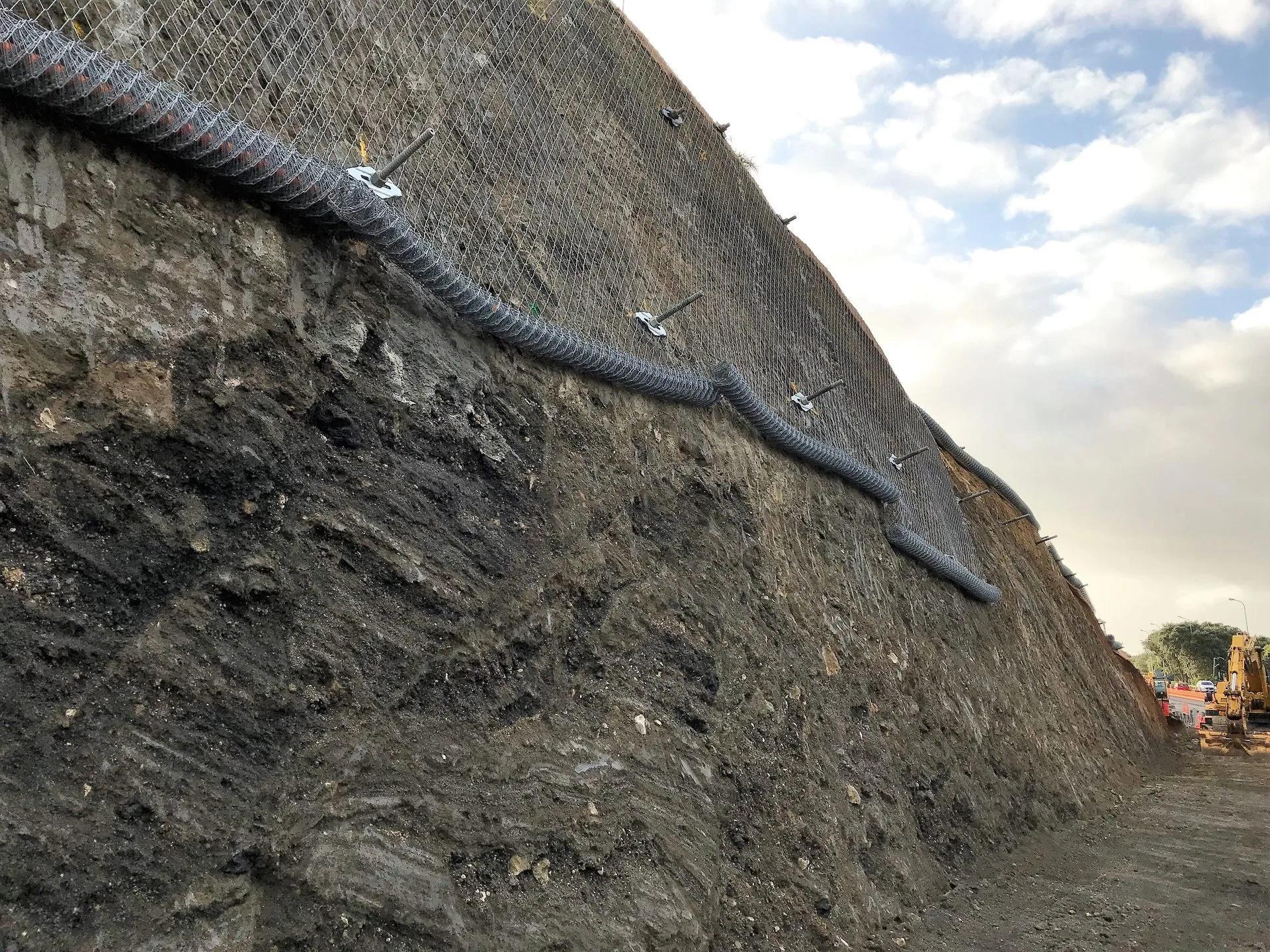
Slopes showing cracking, bulging, or movement on natural or cut faces. New Zealand's high rainfall and seismically active geology make slopes inherently vulnerable — cut faces created for roading, residential development, or infrastructure frequently become unstable once the natural equilibrium is disturbed. Early intervention is critical; slopes under active movement are far more costly and difficult to remediate. GSI NZ uses limit equilibrium and finite element analysis to characterise the failure mechanism and design the most efficient combination of reinforcement — typically soil nails, rock anchors, drainage, and surface protection installed in place without slope reconstruction. Our IRATA rope access capability and helicopter-deployable drill rigs mean we can carry out stabilisation on steep, remote slopes with no road access — the same capability that made GSI NZ the team called to respond to post-KaikÅura earthquake slope failures in 2016 and Cyclone Gabrielle damage across nine State Highway sites in Hawke's Bay.
Warning signs to watch for
- —Surface cracking, particularly at the crest or mid-slope, often after heavy rain
- —Bulging or lateral deformation in the lower slope area
- —Springs or seepage appearing on previously dry slopes
- —Tilting trees, displaced fences, or uneven ground surface along the slope
Embankment & Shoulder Failures
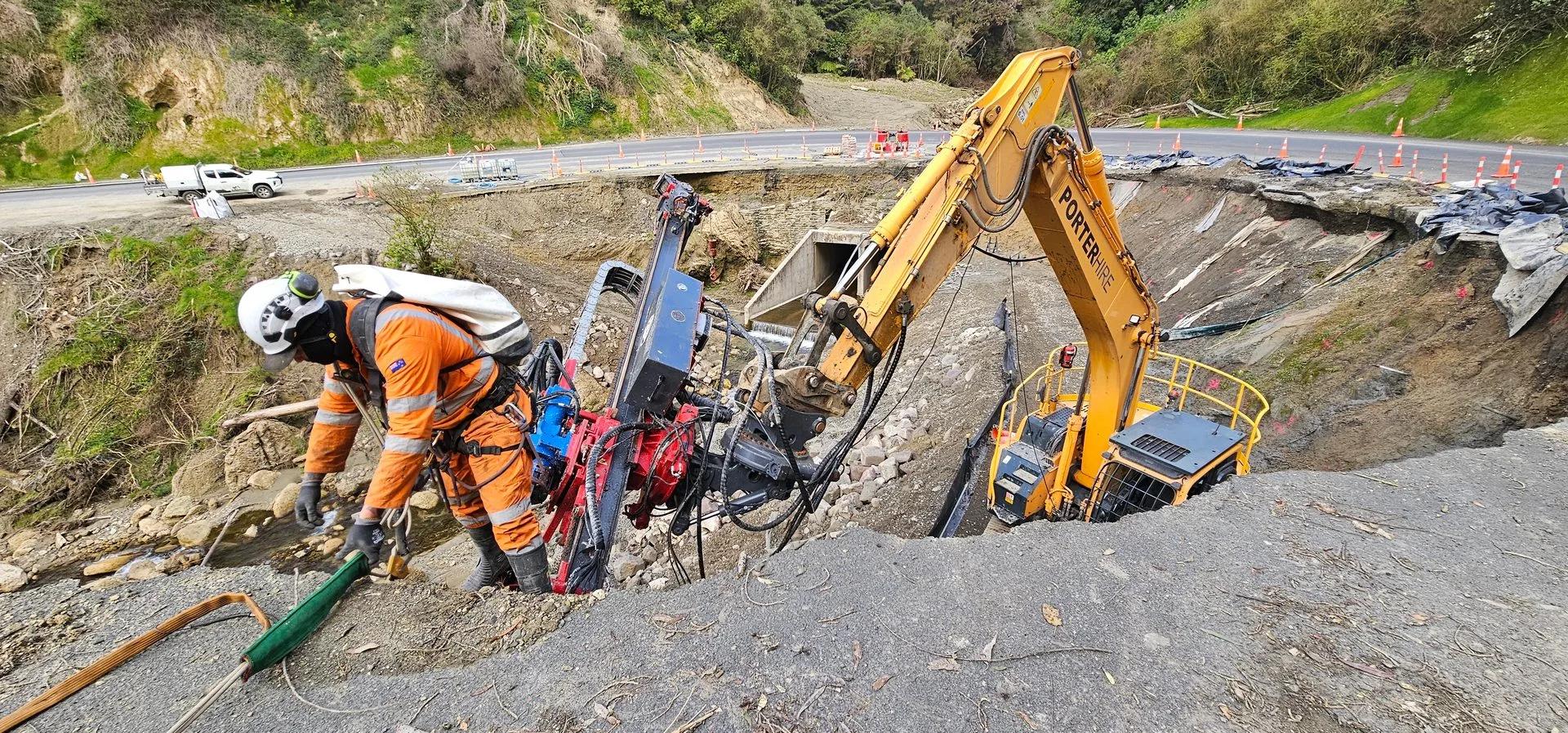
Road or rail embankments that are slumping, eroding, or losing structural integrity. Embankment failures are a major cause of road closures in New Zealand — particularly on the state highway network following high rainfall events. Cyclone Gabrielle alone caused hundreds of embankment failures across the Auckland region, Hawke's Bay, the East Coast, and Northland. Failed embankments require urgent stabilisation to restore access and prevent further deterioration. GSI NZ is pre-qualified with NZ Transport Agency Waka Kotahi for State Highway geotechnical and slope works, enabling rapid engagement on State Highway embankment repair without procurement delays. Repair solutions for embankment failures typically combine micropile or soil nail reinforcement with drainage improvement and surface protection — all designed and built by GSI NZ's in-house team under one contract. At the Mountain Road Cyclone Gabrielle repair programme in Auckland, GSI NZ installed 159 micropiles and 527 soil nails across nine sites — a multi-site emergency repair demonstrating the scale and speed our integrated design-build team can deliver.
Warning signs to watch for
- —Longitudinal cracking parallel to the road or rail carriageway
- —Settlement or differential movement visible across the embankment surface or carriageway
- —Erosion gullies or tension cracks developing in fill material on the embankment face
- —Seepage or persistent wet patches at the embankment toe
Landslide & Debris Flow Risk
Slopes with a history of movement or conditions that make future failure likely. New Zealand's complex geology — weak mudstones, ash layers, and saturated soils on steep terrain — creates persistent landslide risk in many regions. Debris flows, in particular, can travel significant distances and affect areas well below the initial failure point, threatening roads, communities, and infrastructure. GSI NZ responds to active and imminent landslide risk 24/7 nationwide — our own fleet of specialist plant and trained crews means we can mobilise to most New Zealand sites within hours of first contact. For sites where landslide risk is identified before failure, GSI NZ carries out full geotechnical assessment and provides a construction-ready remediation design under one engagement. The same in-house geotechnical engineers who model the failure mechanism supervise the installation crews on site — eliminating the scope gaps and delays that arise when design and construction are handled by different firms.
Warning signs to watch for
- —History of previous landslides or slope movement in the area
- —Steep, poorly vegetated slopes above infrastructure or buildings
- —Scarps, humps, or irregular ground surface indicating past movement
- —Wet weather-triggered slippage on similar nearby slopes
Related projects: Dome Valley — SH1 Landslide, Mountain Road — Cyclone Gabrielle Repair
Our Approach
HOW WE SOLVE IT
GSI NZ engineers design and build the right solution for each site — from assessment through to installation.
Don't Wait
Why Slope Instability Gets Worse Over Time
01
Progressive Movement
Slopes under active movement are far more costly to stabilise than those caught early. Every rainfall event that passes without intervention makes the failure mechanism harder to reverse.
02
Rainfall Saturation
New Zealand's high rainfall saturates slopes and dramatically increases pore water pressure — the primary driver of slope failure. Wet seasons without drainage improvement compound the risk year on year.
03
Compounding Liability
Deferred stabilisation increases both the scale of failure and the cost of repair. Infrastructure owners who delay face higher remediation costs and greater liability exposure.
FREQUENTLY ASKED QUESTIONS
Get in Touch
Slope Moving?
Don't Wait.
Slope instability rarely improves on its own — and the cost of intervention grows as the failure develops. Call us for a rapid site assessment.
Get Expert Help