
Ground Settlement
Settlement and subsidence can cause structural damage, utility failures, and safety risks — often with little visible warning until significant movement has already occurred.
Foundation Settlement Issues
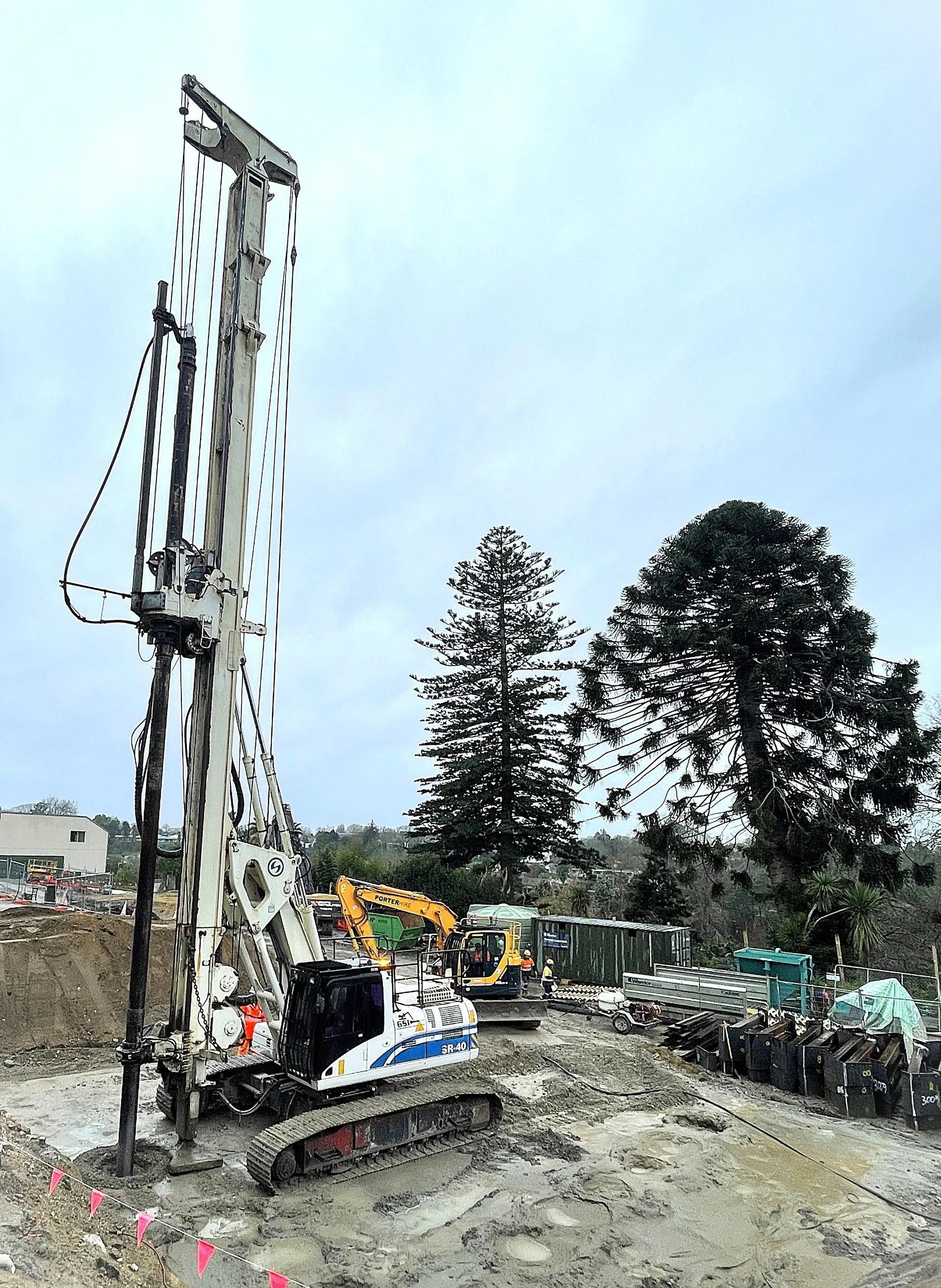
Structures sinking unevenly due to weak, compressible, or poorly consolidated ground. Foundation settlement is a common problem in New Zealand, particularly in coastal and low-lying areas with soft soils, land-filled ground, or areas affected by the Christchurch earthquakes. Differential settlement — where different parts of a structure move at different rates — is particularly damaging and can compromise structural integrity over time. GSI NZ addresses foundation settlement through a range of in-place ground treatment methods — CFA piling to carry loads to competent strata, in-situ mass stabilisation to improve the bearing capacity of soft ground beneath existing structures, or jet grouting where work must be carried out beneath existing foundations without disturbing them. Our Soilmec SM-3 jet grout rig and FD45 CFA rig are both designed for restricted-access and low-headroom environments — meaning ground improvement can often be carried out without excavation or structural disruption. At Metrosports Christchurch, GSI NZ installed 107 soilcrete jet grout columns to 15 m depth beneath the building footprint to mitigate liquefaction risk — demonstrating the precision ground improvement capability available under the GSI NZ design-build model.
Warning signs to watch for
- —Uneven settlement, cracking, or visible tilting in structures, floor slabs, or pavements
- —Differential movement between sections of a structure or road — particularly at joints
- —Cracks appearing in walls, columns, or floor slabs — especially diagonal cracks near corners
- —Doors or windows that no longer align or open correctly due to structural movement
Subsurface Voids & Sinkholes
Underground cavities forming beneath roads, structures, or utilities. Voids can form through soil erosion by groundwater, collapse of old buried structures, dissolution of soluble rock, or failure of deteriorating pipe systems. They are largely invisible until the surface above them collapses suddenly — which can occur without warning, posing significant risk to life, assets, and road users. GSI NZ fills subsurface voids using foamed concrete and polyurethane grouting — both pumpable, low-disruption methods that can reach voids through small injection ports or existing access points without excavation. Foamed concrete can be pumped over 200 m through small-diameter pipes, making it particularly suited to filling decommissioned pipelines and culverts. Polyurethane resin expands rapidly to fill voids under slabs and pavements, with treated surfaces trafficable on the same day in most cases. For larger cavities or where the surrounding ground has been weakened by void formation, in-situ mass stabilisation or deep soil mixing may be combined with void filling to restore ground integrity over a broader area.
Warning signs to watch for
- —Surface depressions, sinkholes, or sudden ground collapses in roads or open ground
- —Pavement cracking or rutting with no apparent surface-level cause
- —Loss of fill or ground material around existing utilities, pipes, or manholes
- —Unexplained changes in local drainage patterns or surface water behaviour
Utility-Related Settlement
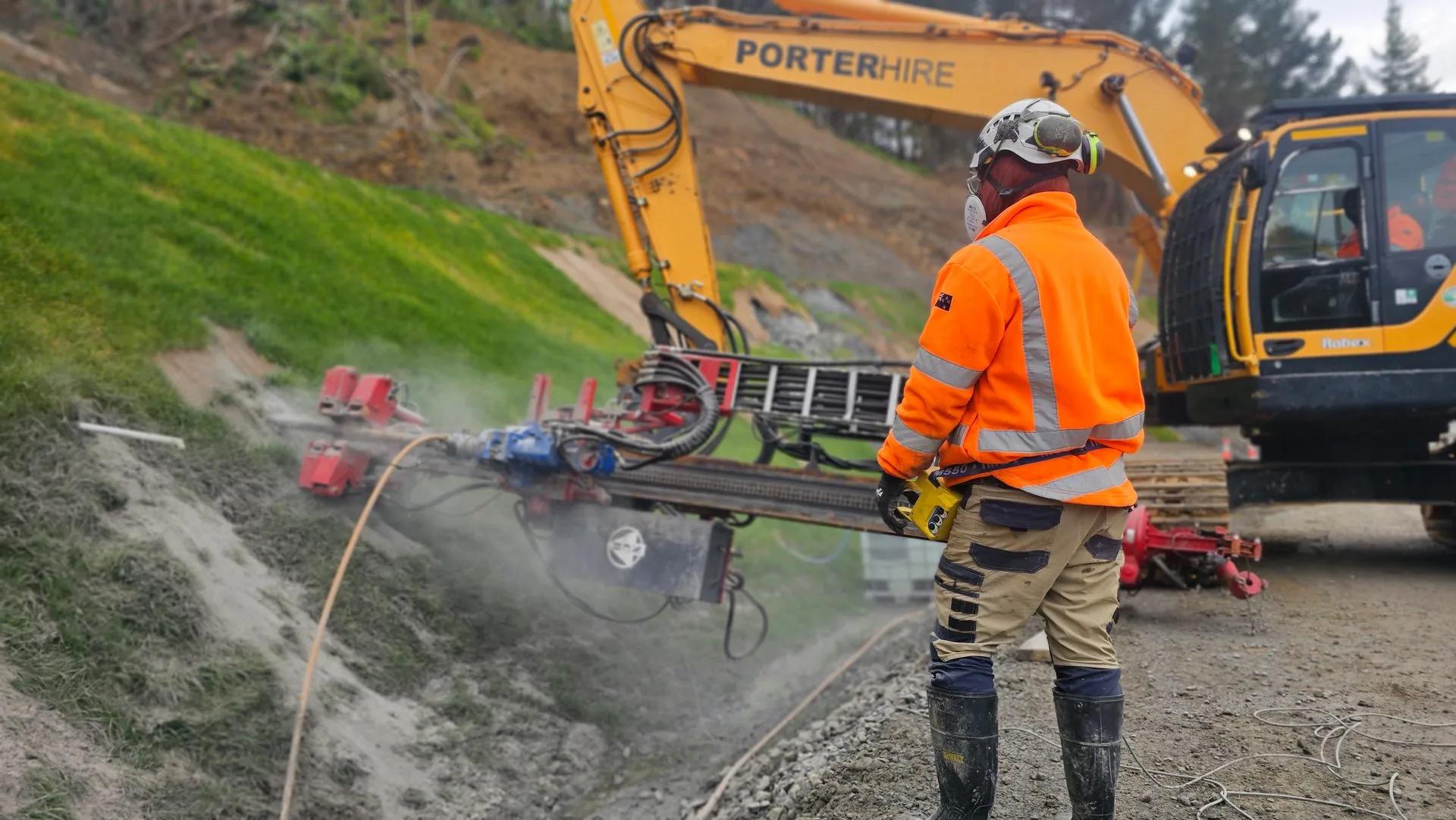
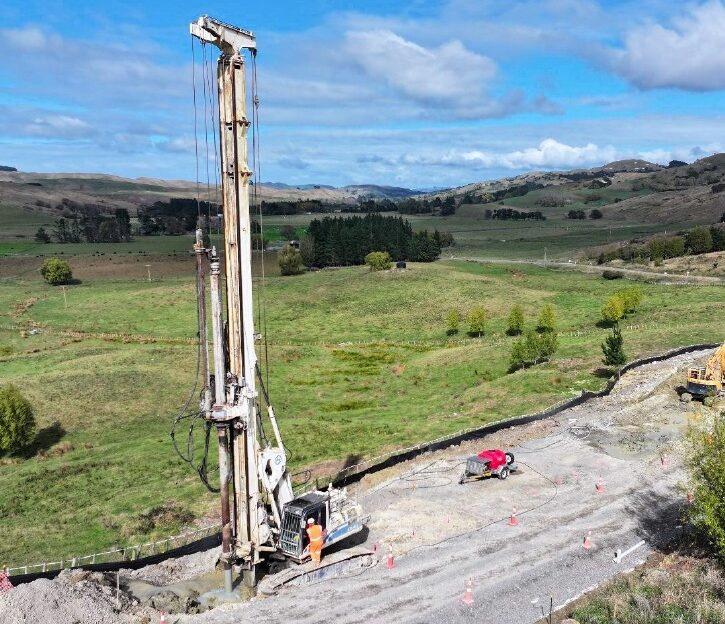
Ground movement caused by leaking pipes, trench backfill failure, or utility excavation. Settlement concentrated around buried services is extremely common in urban environments, where aging pipe networks, poor backfill compaction, or repeated excavation and reinstatement creates ongoing ground instability. Without specialist remediation, the problem typically recurs — leading to repeated pavement damage, utility disruption, and escalating maintenance costs. GSI NZ addresses utility-related settlement by treating the ground around and beneath the affected services in place — without excavating the full trench length. Polyurethane grouting fills voids and compacts loose backfill directly beneath slabs and pavements through small injection ports drilled through the surface. For more extensive trench-related instability, in-situ mass stabilisation or in-situ trench mixing can treat the backfill material in place, improving its stiffness and reducing ongoing settlement risk. All utility ground treatment is designed by our in-house geotechnical engineers to address the actual mechanism of settlement — not just the surface symptom — so the repair lasts rather than needing to be repeated.
Warning signs to watch for
- —Settlement specifically aligned with buried utility trenches, pipes, or service routes
- —Water loss indicating leaking mains beneath structures or pavements
- —Differential settlement concentrated around utility chambers, manholes, or valve boxes
- —Repeated maintenance requirements for the same section of pavement or ground surface
Related projects: Metrosports — Jet Grouting Under Live Structure, Motuoapa Wastewater Treatment Plant
Our Approach
HOW WE SOLVE IT
GSI NZ engineers design and build the right solution for each site — from assessment through to installation.
Don't Wait
Why Ground Settlement Gets Worse Over Time
01
Progressive Loading
As settlement continues, differential movement between sections of a structure increases, causing escalating structural damage. What starts as minor cracking becomes a significant structural problem if left unaddressed.
02
Void Growth
Subsurface voids grow over time as groundwater continues to erode material. The surface gives no warning until sudden collapse occurs — by which point intervention is far more costly and disruptive.
03
Foundation Compromise
Delayed treatment means ground improvement must work around worsening conditions — increasing the cost and complexity of remediation compared to early intervention.
FREQUENTLY ASKED QUESTIONS
Get in Touch
Ground Settling?
Let's Investigate.
Settlement can signal a range of underlying problems — from soft ground to voiding. Our engineers will diagnose the cause and engineer a solution that stops it.
Get a Free Assessment