
Erosion Control
Erosion can undermine foundations, damage waterways, and accelerate slope instability. Left untreated, it compounds over time — particularly in New Zealand's high-rainfall environments.
Seepage & Internal Erosion
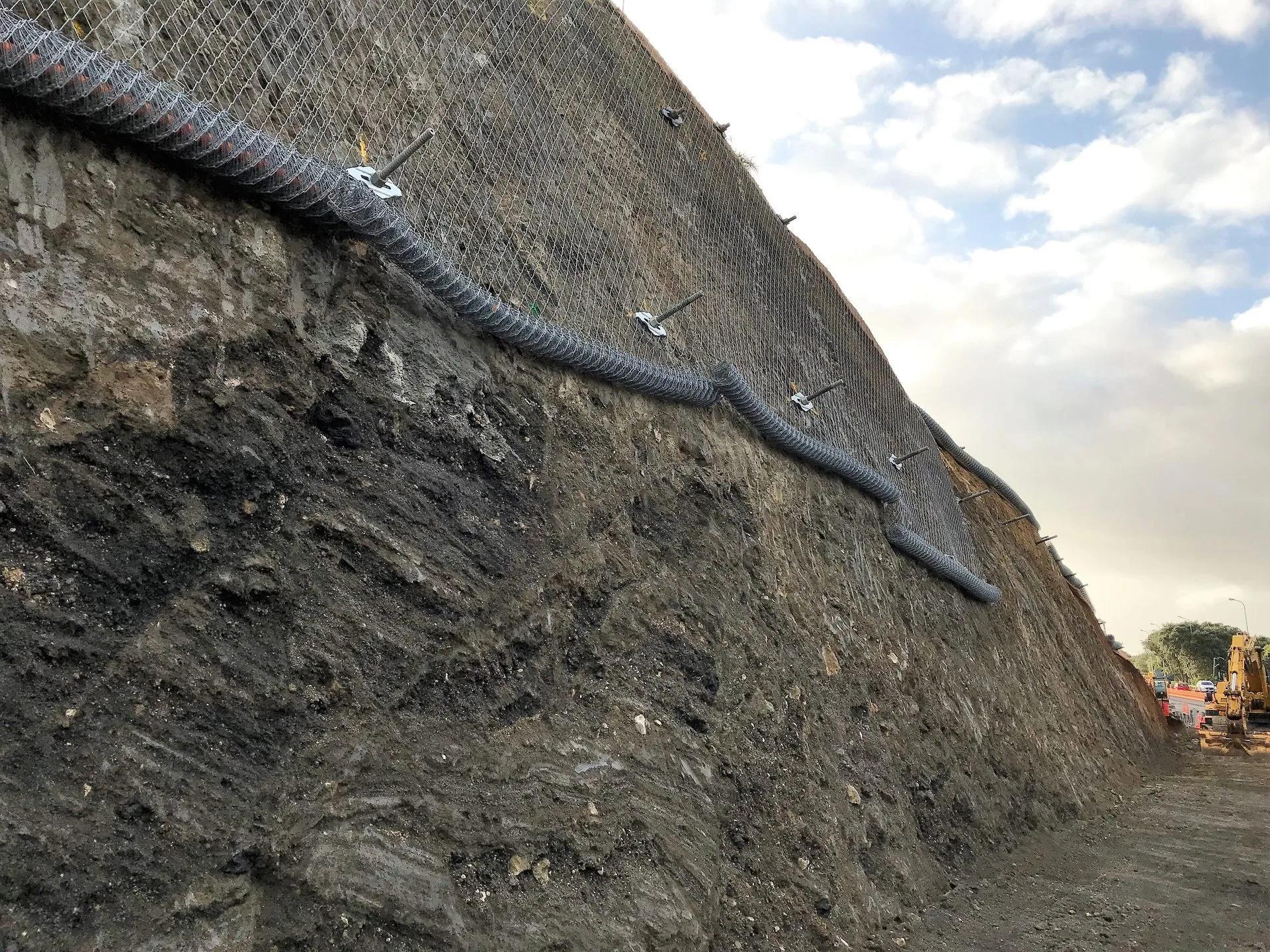
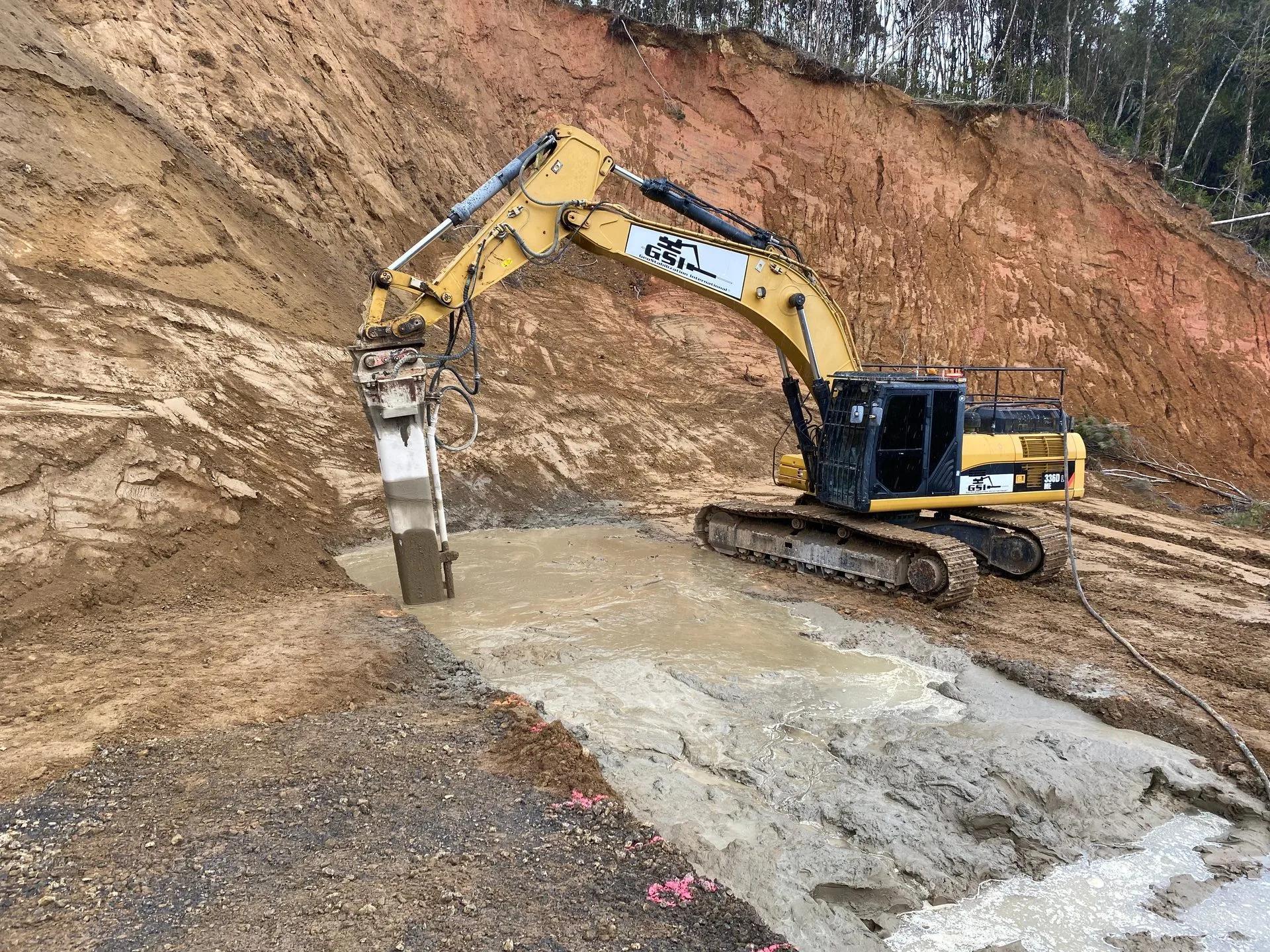
Water moving through embankments or slopes, causing internal material loss. Internal erosion — also known as piping — can be extremely difficult to detect visually until significant damage has occurred. In embankment dams, road fill, and rail formations, progressive internal erosion can lead to sudden catastrophic failure with little warning. New Zealand's high groundwater levels and seasonal rainfall make this a significant risk on many fill structures. GSI NZ addresses internal erosion through a combination of drainage improvement — cut-off drains, horizontal drains, and filter systems to intercept and redirect seepage — and structural reinforcement where embankment integrity has been compromised. In-situ trench mixing and deep soil mixing are available where a continuous low-permeability cut-off wall is required to control groundwater flow through or beneath a fill structure. All seepage and internal erosion investigations are managed by our in-house geotechnical engineers, with construction carried out by the same integrated team.
Warning signs to watch for
- —Turbid or discoloured seepage from embankment toes or cut slope faces
- —Unexpected springs or persistently wet areas on previously dry embankments
- —Sinkholes or surface settlement appearing on or near embankment crests
- —Progressive increase in seepage volume over time
Washouts & Scour Damage
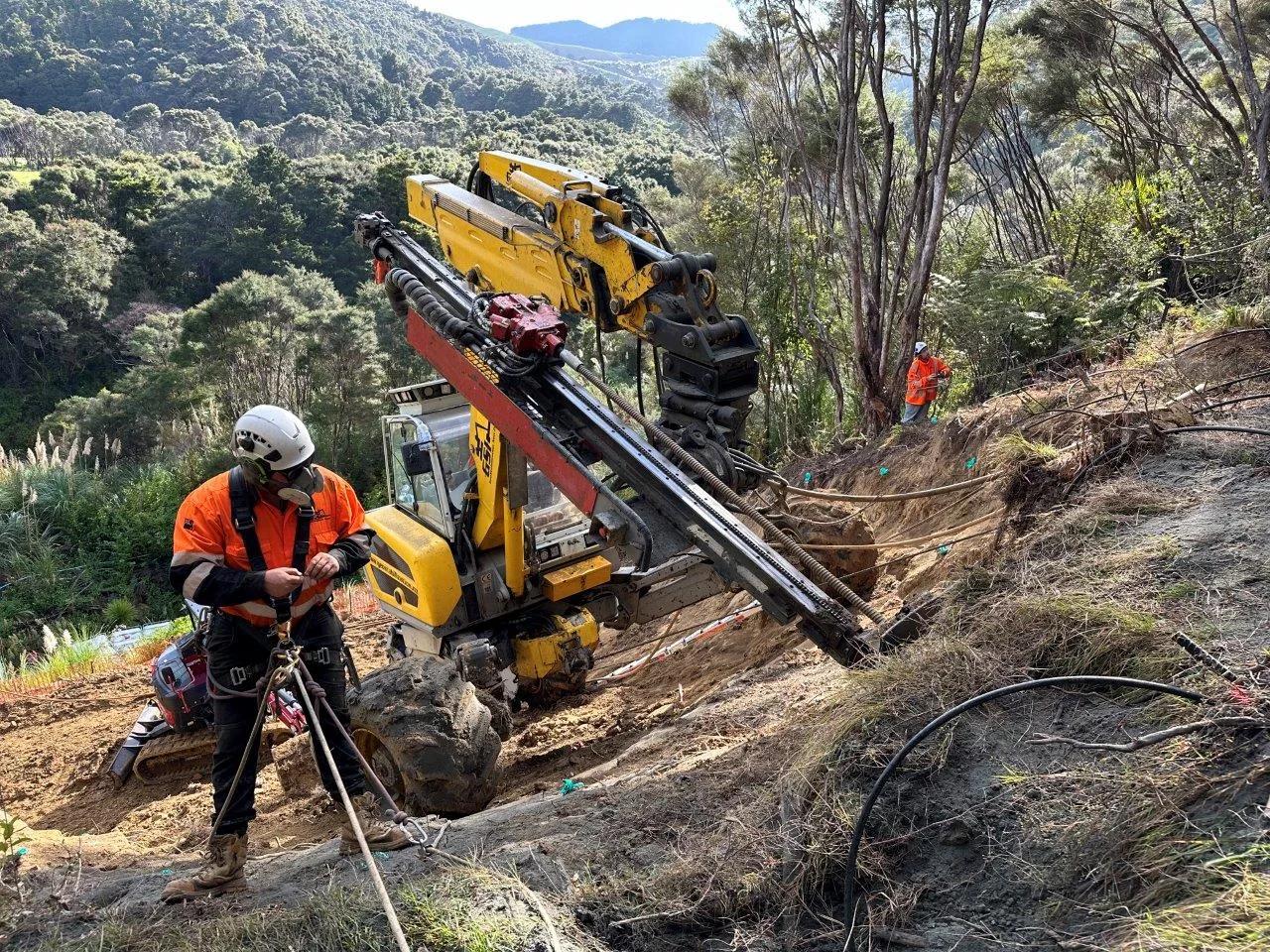
Stream and river erosion undermining roads, bridges, and infrastructure foundations. Scour is one of the leading causes of bridge failure worldwide — and New Zealand's steep, fast-flowing rivers make it a constant risk for infrastructure crossings. Flood events can remove large amounts of material from around bridge piers and abutments in hours, creating immediate structural risk that requires rapid response. GSI NZ responds to active scour and washout events 24/7 nationwide — our own fleet of plant and trained crews means we can mobilise to most New Zealand sites within hours. For riparian bluff and riverbank stabilisation, we work from the slope crest using IRATA rope access where required, minimising disturbance to the waterway while carrying out soil nail and shotcrete installation on near-vertical faces. Fiberglass soil nails are specified for corrosion resistance in saturated riparian environments. GSI NZ carried out helicopter-only riparian bluff stabilisation along the Ruamahunga River in the Wairarapa following Cyclone Gabrielle, demonstrating the access and technical capability required for the most constrained New Zealand river environments.
Warning signs to watch for
- —Visible undercutting or exposure of bridge abutment or culvert foundations
- —River or stream banks eroding toward roads, buildings, or infrastructure
- —Loss of fill material from road or rail embankment toes near waterways
- —Damage to or failure of riprap, gabion, or revetment protection systems
Surface Erosion on Slopes
Progressive loss of material from unprotected cut or fill faces. Surface erosion is common on newly created cut faces, poorly revegetated fill slopes, and on any steep face exposed to rainfall. Left unaddressed, rill erosion develops into gully erosion — which is far more costly to remediate. In steep terrain, eroded material can also block drains, culverts, and waterways, compounding the problem. GSI NZ addresses surface erosion through shotcrete slope protection, mesh installation, and drainage improvement designed to intercept and manage surface water before it concentrates and causes damage. Shotcrete can be applied from rope access positions on steep faces where conventional access is impractical — an important capability on highway cuttings and cliff-face exposures where surface erosion is often most severe. The approach is always designed to address the underlying cause — typically poor drainage, inadequate surface protection, or loss of vegetative cover — rather than applying a surface patch that will fail when conditions repeat.
Surface erosion is particularly prevalent on New Zealand's highway network, where cut and fill slopes created during roading construction are exposed to intense rainfall without adequate drainage or revegetation. GSI NZ carries out erosion assessments to identify the underlying drainage and structural causes before specifying treatment — ensuring the solution addresses the mechanism rather than masking the symptom.
Warning signs to watch for
- —Rill or gully erosion channels developing on cut or fill faces during rainfall
- —Exposed aggregate, subsoil, or bedrock where topsoil has been progressively lost
- —Debris or sediment accumulating at the base of slopes or in drainage channels
- —Progressive loss of vegetation cover on steep embankment or cut faces
Related projects: Ruamahunga Cliff Stabilisation, Te Henga Road — Landslide Repair
Our Approach
HOW WE SOLVE IT
GSI NZ engineers design and build the right solution for each site — from assessment through to installation.
Don't Wait
Why Erosion Risk Compounds Over Time
01
Undermining
Erosion that starts at the surface progressively undermines foundations, slopes, and structures. What begins as surface material loss can evolve into structural failure if left untreated.
02
Accelerating Damage
Each rainfall event removes more material than the last as erosion channels widen and deepen. Without intervention, damage accelerates rather than stabilising over time.
03
Hidden Risk
Internal erosion and seepage can go undetected until sudden structural failure occurs. By the time visual signs appear, significant internal damage may already have taken place.
FREQUENTLY ASKED QUESTIONS
Get in Touch
Erosion Getting
Worse?
Erosion is progressive — and every weather event makes the next one worse. Our engineers design erosion control solutions built to New Zealand's conditions.
Get a Site Assessment